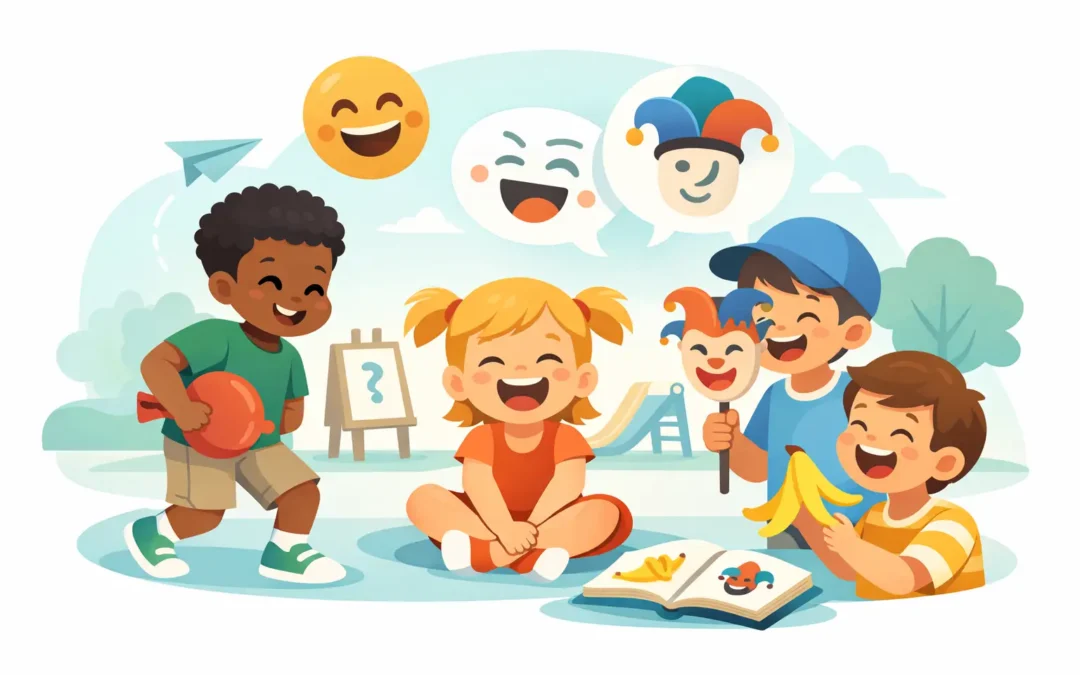
A silly joke can do more than earn a snort-laugh at the breakfast table. The best kid friendly joke activities give children a low-pressure way to take turns, notice feelings, recover from mistakes, and make someone else feel included. That is serious kindness practice disguised as a whoopee cushion with good manners.
For children ages 6 to 12, humor can be a helpful social bridge. A child who is unsure how to join a game may feel brave enough to offer a joke. A child who is frustrated after a tough school day may relax when everyone shares a ridiculous punchline. The clubhouse rule is simple: jokes should leave people feeling brighter, not smaller.
Why kid friendly joke activities work
Jokes have a beginning, a surprise, and a response. That little pattern quietly teaches several big skills. Children practice waiting while someone else tells the joke, reading the room before they share one, and listening for whether their audience is having fun. They also learn that a joke can flop without becoming a disaster. A cheerful, “Well, that one needed a longer tail!” helps a child try again without embarrassment.
The trade-off is worth naming: not every child wants to perform, and not every joke belongs in every setting. Some kids would rather write a joke, draw it, or whisper it to one trusted person. Give those choices freely. The goal is not to create tiny comedians. It is to create confident, caring humans who know laughter feels best when everyone is safe in the fun.
10 kid friendly joke activities to try
1. The Mystery Paw Punchline
Write several child-safe joke setups on slips of paper, such as, “What do you call a dog who loves taking naps?” Keep the punchlines in a separate pile. Children choose one setup and invent their own ending before hearing the official answer. “A snooze hound” may be the expected punchline, but “a pillow poodle” deserves a round of applause too.
This activity makes creativity more important than getting the answer right. After each turn, invite listeners to name one thing they liked about the joke. That tiny compliment turns the game into an encouraging mission.
2. Joke-and-Draw Switcheroo
Give each child a folded sheet of paper. On the outside, they write or dictate a joke setup. Then they pass it to a partner, who draws what they imagine before opening the paper to see the punchline. The results are often wonderfully wacky.
Try prompts with animals, food, or school supplies rather than jokes about people. A banana wearing sneakers is fair game. A classmate’s appearance, family, ability, or mistake is not. This is a gentle way to teach the difference between silly humor and hurtful humor without turning playtime into a lecture.
3. Rascal’s Ridiculous Rewrites
A joke that gets a laugh from one child may make another child uncomfortable. In this game, an adult reads a mildly unkind joke scenario without delivering a mean punchline. For example: “A puppy laughs because another puppy drops his books.” Ask the group to help Rascal von Ruff rewrite the moment so it is funny and kind.
Children might decide the puppy helps pick up the books, then discovers a library card stuck to his own ear. Let them build a new punchline together. They are practicing empathy while learning a powerful comedy secret: the funniest target is often a goofy situation, not a person.
4. The Compliment Comedy Hat
Place kind, specific compliments in a hat or bowl. A child draws one and turns it into a playful joke or mini-announcement. “You are great at sharing” might become, “Alert! We have spotted a Sharing Superstar in the wild!”
Keep the compliments genuine. Focus on choices children can make, such as patience, effort, creativity, honesty, or including someone. This helps children hear positive words without feeling put on the spot for being perfect.
5. Build-a-Joke Relay
Use three bowls labeled “who,” “where,” and “silly surprise.” Fill them with slips such as “a poodle,” “at the grocery store,” and “finds a singing potato.” Each player picks one slip from each bowl and has 30 seconds to make a short joke or funny story.
For a quieter group, skip the timer and let children work in pairs. For a lively classroom, teams can perform their best creation. Remind everyone that clapping is not only for the biggest laugh. It is also for brave attempts, clever ideas, and kind teamwork.
6. The Giggle Gratitude Circle
At the end of a meal, club meeting, or school day, invite each person to share one funny moment they appreciated. It could be a joke, a pet’s silly behavior, or something they noticed that made them smile. Then add one sentence of gratitude: “It made me happy because we were laughing together.”
This activity is especially useful after a tense day. It does not ask children to pretend hard feelings disappeared. It simply gives the group one warm place to land. If someone cannot think of a funny moment, they can pass or share something cozy instead.
7. The No-Put-Down Joke Test
Make a simple hand signal for checking a joke before telling it. A paw-shaped hand held up can mean, “Pause for the kindness test.” Ask three quick questions: Is anyone the butt of the joke? Would I feel okay if the joke were about me? Can I tell it without embarrassing someone?
Children do not need to overthink every pun. The test is for jokes involving real people, classmates, siblings, or sensitive topics. If a joke does not pass, challenge the group to change the target into a made-up character, a mischievous sock, or a runaway meatball.
8. Punchline Pass
Sit in a circle with a soft ball or plush toy. One child starts a joke setup, then gently tosses the object to someone else, who supplies a punchline. The group celebrates both expected answers and surprising ones.
The passing part matters. It gives active children a physical job and helps everyone see whose turn it is. If catching is difficult or the space is small, simply point, tap a desk, or pass an imaginary golden bone.
9. The Kindness News Desk
Invite children to become cheerful news anchors reporting “breaking kindness.” One announces a real or imagined kind choice, and another adds a playful closing line. “Breaking news: Jordan saved a seat for a new student. Experts say the lunch table is now 87 percent more welcoming!”
Avoid requiring children to share personal stories. They can report on fictional animal characters or community helpers instead. The point is to connect kind actions with pride and joy, not to make anyone feel watched.
10. Make a Joke Mission Card
Create small cards with one joke challenge on each: tell a clean animal joke, draw a joke for someone who needs a smile, invent a joke about helping, or ask a grown-up for their favorite childhood joke. Children can choose a card independently or complete one as a family mission.
Bixby’s Kindness Clubhouse uses this kind of playful mission energy because children remember lessons they get to do. Keep completed cards in a jar, binder, or special “Paws-itivity File” so children can revisit the jokes that made their people smile.
Help children handle the not-so-funny moments
Even kind joke activities can get bumpy. Someone may interrupt, repeat a joke too many times, or laugh when another child is not laughing. Adults can guide the moment with calm, simple language: “We want everyone in on the fun,” or “That joke did not land kindly. Let’s give it a new ending.”
Try not to shame the child who missteps. Many children are still learning social timing and do not mean to be cruel. A redo teaches more than a scolding. If a child is genuinely upset, pause the game, check in privately, and choose a different activity later.
A good joke is a small gift: it says, “I noticed something silly, and I wanted to share a smile with you.” Leave a few blank cards and crayons where children can reach them, then let the next top-secret kindness mission begin with a giggle.
Discover More Bixby Missions
If your child enjoyed these joke activities for kids, you’ll find many more adventures throughout Bixby’s Kindness Clubhouse. In fact, Volume 3—Bixby’s Comedy Club—is filled with kid friendly jokes, silly punchlines, coloring pages, and activities designed to spread laughter and kindness.
From printable missions and coloring activities to confidence challenges and creative adventures, every activity helps children build kindness, gratitude, friendship, responsibility, confidence, and emotional intelligence—one mission at a time.