
Social Emotional Coloring Book Review: Helping Kids Build Kindness, Confidence, and Better Choices
A child comes home frustrated after a friendship mix-up, drops their backpack, and says, “Nobody gets me.” That’s probably not the moment for a lecture about empathy. It might be the perfect moment for crayons, a funny dog character, and a small mission that gives those feelings somewhere safe to land.
This social emotional coloring book review looks at what families and educators should expect from an activity book designed to build kindness, confidence, respect, friendship skills, and responsible decision-making.
The short answer? Coloring can be much more than a quiet-time activity when it gives children a playful way to name their feelings, think about their choices, and practice what they might do next.
What Makes a Social Emotional Coloring Book Different?
A regular coloring book can offer a wonderful creative break, but it doesn’t automatically teach social-emotional skills. A social emotional coloring book adds purpose to the page. It might invite a child to think about how a character feels, choose a kind response, notice something they’re proud of, or complete a real-life challenge after the coloring is finished.
That difference can be especially helpful for children ages 6 to 12. They’re learning how to handle disappointment, share space, repair mistakes, speak up respectfully, and understand that someone else may see the same situation very differently.
Those are big skills. A page filled with instructions and definitions can quickly start feeling like homework. A mission involving a poodle, a joke, and a “What would you do?” moment feels a lot more like joining a secret clubhouse.
The best social-emotional books don’t tell children they’re bad because they made an unkind choice. They help children understand that choices have consequences and that a better next choice is always possible. That’s a much more encouraging place to begin.
What Should a Good Social Emotional Coloring Book Include?
A worthwhile book should make its learning goal clear without becoming preachy. Children should be able to enjoy the activities on their own, while parents, grandparents, teachers, and caregivers can use them as easy openings for deeper conversations.
If every page requires an adult to give a ten-minute explanation, chances are it isn’t going to get much use during a busy school day or after dinner when everyone’s already running low on patience.
It’s also important that the activities go beyond simply saying, “Color this picture about kindness.” A child can color a smiling character without thinking very much about kindness at all. A stronger activity might ask the child to identify a kind choice, imagine how kindness feels to the person receiving it, or try one small act of helpfulness during their own day.
The coloring creates the calm, inviting doorway. The thinking and missions are what help the lessons stick.
Humor helps, too. Children are much more likely to return to an activity book when they’re having fun. Silly jokes, mischievous moments, and expressive animal characters can lower a child’s guard, especially when the topic involves something tricky like apologizing, handling anger, or feeling left out.
A little Rascal von Ruff-style ruff-ian behavior also reminds children that nobody makes perfect choices all the time. What matters is what we choose to do next.
Give Different Personalities Room to Participate
Not every child approaches activities the same way. Some children will race through the missions. Others will carefully color every tiny paw print and insist that no two pumpkins may ever be the same shade of orange. Some children love talking about feelings. Others would rather discuss practically anything else on Earth.
A good social-emotional activity book gives children different ways to participate. They might color, write, draw, answer a question, complete a challenge, or simply think about what they’d do in a particular situation. Flexible activities let children participate in ways that feel comfortable while still practicing the same important skills.
What Can Children Practice While They Color?
Social-emotional learning becomes much more memorable when it’s connected to something children can actually do. A child who colors a confidence-themed page might also write down something they did bravely. A page about respect might lead to a challenge to listen without interrupting during one conversation. A friendship activity could help a child think of a kind way to include someone who seems left out.
These moments may seem small, but small is exactly the point. Children don’t need one enormous lesson about becoming a paws-itively awesome human. They need repeated opportunities to practice the building blocks: pausing before reacting, noticing another person’s feelings, thinking through a situation, and choosing what to do next.
A well-designed social emotional coloring book can help children practice skills such as:
- recognizing and naming emotions
- showing empathy when someone is hurt or worried
- using respectful words during disagreements
- building confidence after a mistake or setback
- making thoughtful decisions
- choosing kindness even when no one is watching
The goal isn’t perfection. Children will still have grumpy mornings, arguments over games, friendship mix-ups, and days when their best idea seems to be stomping dramatically down the hallway. Adults have those days, too. We’re usually just slightly more subtle about the stomping.
What these activities can provide is a shared language for starting over: “What could we do differently next time?”
The Bixby’s Kindness Clubhouse Approach
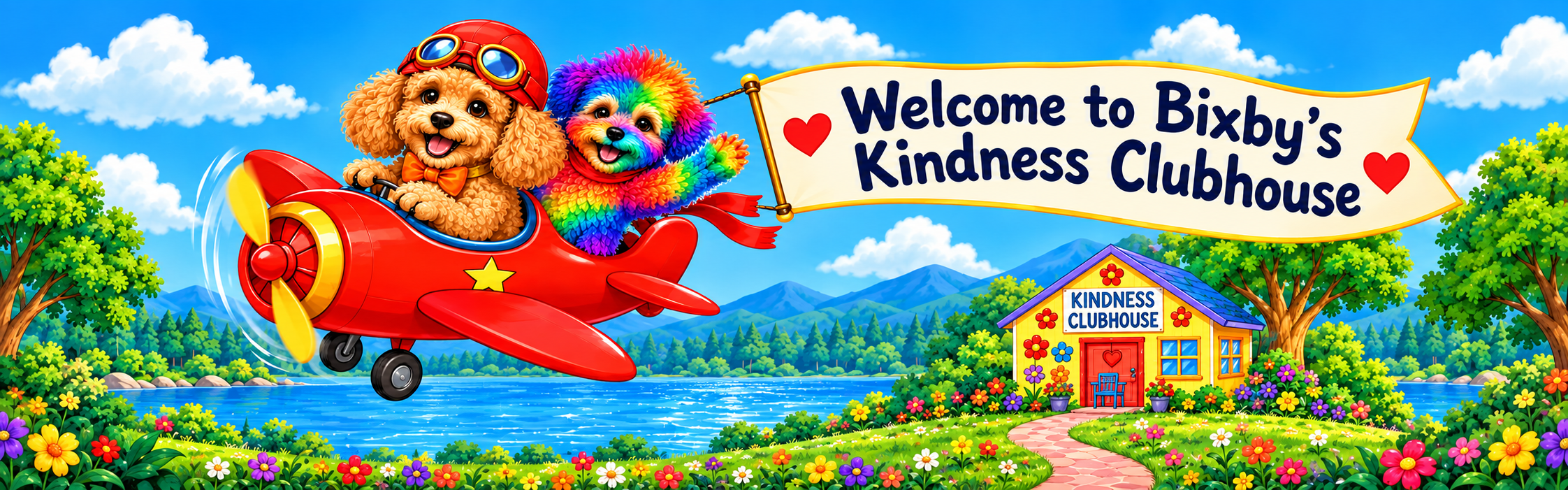
Bixby’s Kindness Clubhouse presents social-emotional learning through playful coloring adventures rather than a stack of behavior worksheets. Bixby McChat, the Grand Poodle of Paws-itivity, brings encouragement and kindness to the Clubhouse, while Rascal von Ruff adds enough harmless mischief to keep everything from becoming too serious.
That character-led approach can be especially helpful for children who don’t love direct conversations about their own behavior or feelings. Sometimes it’s much easier to talk about what a fictional pup should do after being left out than it is to immediately explain what happened at lunch. Once the conversation begins, an adult can gently ask, “Have you ever felt like Rascal?” That one question can open a door without putting a child on the spot.
The activities can also be used more than once. A kindness mission can become a family challenge. A confidence-building activity can be revisited before a new school year, a performance, a sports event, or another situation that feels a little intimidating.
Teachers might use an activity as a quiet morning exercise, a counseling-group conversation starter, or a calm transition after recess. Families can keep a book nearby for rainy afternoons, travel, quiet time, or those mysterious twenty minutes before bedtime when children suddenly develop enough energy to power a small city.
A Coloring Book Isn’t a Magic Wand
It’s important to keep expectations realistic. A cheerful mission can help children practice important skills, but it can’t solve every difficult situation by itself. Coloring books and social-emotional activities are wonderful conversation starters and practice tools, but they aren’t meant to replace adult support when a child is dealing with ongoing bullying, intense anxiety, major behavior changes, or serious emotional challenges. Sometimes children need more listening, more support, or help from a teacher, school counselor, health care provider, or other qualified professional.
How to Get More Than a Pretty Coloring Page
Adults don’t need to turn every activity into a formal lesson. In fact, doing that can remove some of the fun. If a child wants to color quietly first, let them. When the moment feels right, try one easy, curious question such as, “Which character looks most like you today?” “What choice could make this situation better?” or “Who could use a little kindness from you this week?”
Then listen. Sometimes the first answer will be a joke. Sometimes it’ll be a shrug. Sometimes a completely unrelated story about somebody at recess suddenly becomes very related after all. Give children a little room to get there.
Families can also choose one mission each week and make it part of everyday life. Maybe the challenge is giving one sincere compliment, helping someone without being asked, including someone new, or taking one calming breath before responding when emotions start getting big.
In a classroom or youth group, children can brainstorm several possible solutions instead of being told there’s only one correct answer. Respectful problem-solving often has more than one path, and children learn a lot by hearing how someone else might handle the same situation.
Notice the Skill, Not Just the Behavior
When children make thoughtful choices, specific encouragement helps them understand exactly what they did well. Instead of simply saying, “Good job being kind,” you might say, “I noticed you let your brother finish his turn even though you were excited. That showed respect.” Now the child can connect the action with the character skill.
The same idea applies to confidence, responsibility, friendship, gratitude, and empathy. When children understand what those big words look like in ordinary life, they become much easier to practice.
Who Might Enjoy a Social Emotional Coloring Book?
This kind of activity book can be especially appealing to children who enjoy animals, imaginative stories, jokes, coloring, and hands-on activities. It can also work well for children who have plenty to say but need something to do with their hands before they’re ready to talk.
Coloring gives busy hands a job while feelings find their words. Of course, not every child loves coloring. Some would much rather move, build, act something out, or play a game and that’s where Bixby’s missions come in. Kids can sketch, write a response, go on a mission, talk through the situation, or come up with their own solution. The mission matters more than staying perfectly inside the lines.
Helping Kindness Become Something Kids Can Practice
The most helpful social-emotional resources don’t make children feel as though they’re constantly being corrected. They help children feel capable. When an activity invites a child to laugh, create, think, make choices, and try again, kindness becomes more than a rule taped to the refrigerator. It becomes something children can actually practice in their own wonderfully imperfect everyday adventures. And that’s where the real learning happens.